Why Your Ad Creative Fails: The Research Gap Most Agencies Ignore
Jason Solomons
April 1, 2026
You've been there. Your team generates 20 ad variations, launches them on Meta, waits three days, and kills 17 of them. The surviving three get decent ROAS, but nobody can explain why those three worked.
That's not a creative problem. That's a research problem.
The $50 Billion Guesswork Industry
The global digital ad spend crossed $700 billion in 2025. And the vast majority of that creative is built on vibes. A media buyer opens Canva, picks a template that "feels right," writes copy based on what they think the audience wants, and hits publish.
When it works, it feels like magic. When it doesn't, the team blames the algorithm, the audience, or the budget. Nobody blames the process, because there isn't one.
80%
of ad variations underperform the account average within the first 72 hours.
Why Creative Volume Isn't the Answer
AdCreative.ai, Pencil, and a dozen other tools promise to solve this with volume. Generate 50 variations instead of 5. Test more. Find winners faster.
But volume without direction is noise. If you don't know who you're talking to, making more ads just means making more wrong ads, faster.
A 2025 Meta study found that ads with audience-specific messaging outperformed generic creative by 3.2x on conversion rate, regardless of the format or visual style. The message mattered more than the design.
What Research-First Creative Requires (The Hard Way)
The agencies that consistently produce high-performing creative don't start with a design tool. They start with a question: who is this person, and what do they care about?
Doing this manually is brutal:
Demographic Grounding
Manually pulling Census data, cross-referencing ZIP codes, building income and education profiles by hand. Hours of spreadsheet work per persona.
Competitive Context
Scrolling through hundreds of competitor ads on the Meta Ad Library, screenshotting and categorizing manually. A full day per competitor.
Sentiment Analysis
Reading 500+ Amazon reviews, Reddit threads, and TikTok comments. Manually tagging themes and language patterns. Days of tedious work.
Concept Testing
Hiring a focus group facility ($8K-$15K), recruiting participants, scheduling 4-6 weeks out, and hoping the 8 people who show up are representative.
Most agencies can't afford this. A 5-person shop managing 8 clients doesn't have 40+ hours per campaign for research. So research gets skipped, and the creative suffers.
The Gap Every Creative Tool Ignores
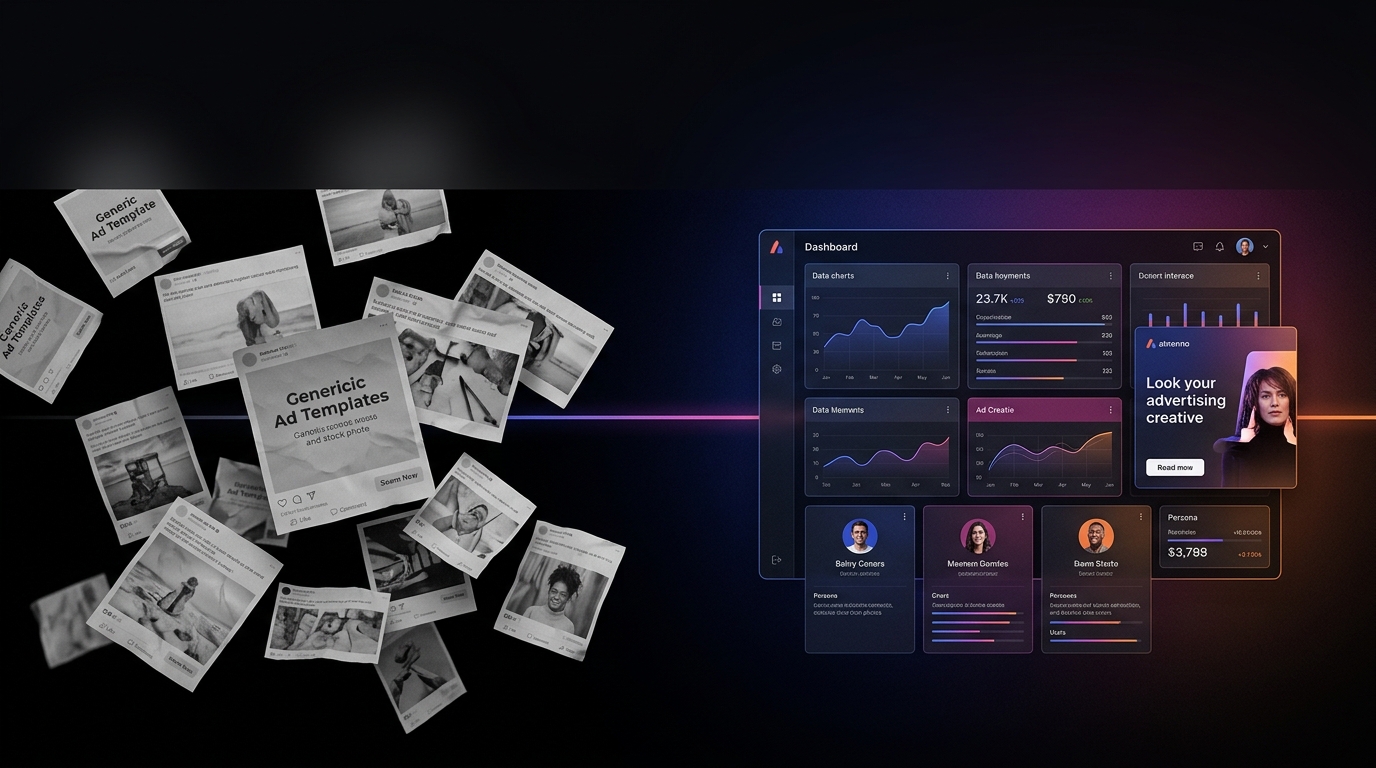
Every ad creative tool on the market starts at step 5 of a 6-step process. They skip the research, skip the personas, skip the concept testing, and go straight to "pick a template."
That's like writing a prescription before running tests. You might get lucky. But you're not practicing medicine.
How AdForge Closes the Gap
We built AdForge because we were tired of watching agencies burn money on guesswork. The platform does in minutes what used to take weeks:
Automated Market Intelligence
AdForge scrapes product pages, competitor listings, social media, and review sites automatically. No manual data entry. No spreadsheets.
Census-Validated AI Personas
Personas grounded in real US Census Bureau demographics. Not "millennials who like fitness." Real people with real incomes in real cities.
AI Focus Groups
Test concepts against your personas before spending a dollar. Run 5 focus groups in the time it takes to book a conference room.
Data-Backed Creative Generation
Generate platform-ready ad creative informed by everything above. Not random variations. Informed hypotheses.
The result: fewer variations needed, higher hit rates, and creative you can actually explain to clients.
The fix isn't more variations. It's better inputs.
AdForge is the only platform that starts with research, not templates.
Ready to try data-backed ad creative?
Join the AdForge waitlist. Refer 3 colleagues to skip the line.
Get Early Access